
Roulette Not on GamStop: The Identity Checks Behind the Spin
 Available in GB
“Not on GamStop” sounds like a shortcut around paperwork. In practice, it often means fewer UK safeguards and less certainty about when a site will ask for identity documents. The Gambling Commission says commercial gambling services offered to people in Great Britain require its licence, even when an operator holds a licence elsewhere.

The figures show a market, not a quality mark. The Commission estimates that 2.5% of people who gambled online in the four weeks covered by its April 2025 to April 2026 analysis had used illegal gambling websites. And its September 2026 dashboard identified 586 such sites accessible to consumers in Great Britain. Neither figure tells us whether any particular roulette site is honest or pays promptly.
My concern is the gap between a slick sign-up and a difficult withdrawal. British-licensed operators must establish identity before allowing a customer to gamble. Offshore sites are not licensed in Great Britain; UK protections, including the UK complaints and regulatory framework, do not apply to them. Any claim that an overseas licence makes a site lawful for the British market is hollow. For gambling-related support, GamCare operates the free National Gambling Helpline on 0808 8020 133, 24 hours a day, every day.
As of 12 November 2026, Fast Payout Online Casino looks at roulette through that identity-check question: when the check happens, what it can involve, and what a delay may signal. “GamStop” is often typed “gamestop”; the scheme’s name is written GamStop.
Understanding Online Roulette Not on GamStop
Online roulette not on GamStop generally means a roulette service that is not connected to the British national online self-exclusion scheme. That alone does not establish where the operator is licensed, whether its licence is current, or whether the site has any effective player protections.
GamStop blocks access to online gambling accounts with participating operators licensed in Great Britain. Since 31 March 2020, joining the scheme has been a condition of a British remote gambling licence. An offshore site is outside that scheme’s coverage. The fact sheet marks the specific offshore coverage statement as unconfirmed by a primary regulator source, but the limitation follows from the scheme’s UK-licensed operator obligations.
That distinction matters. A foreign regulator’s authorisation is not a substitute for a Gambling Commission licence when commercial gambling is offered to consumers in Great Britain. The Commission says that offering such services without its licence is illegal, even if the operator holds a licence in another jurisdiction.
Self-exclusion is not a temporary inconvenience to work around. A GamStop exclusion cannot be cancelled during its chosen term; after the term, it stays in place until the person contacts GamStop to remove it. An offshore roulette site is not a legitimate way around it.
The UK Baseline for Roulette Betting Not on GamStop
British-licensed sites are the useful comparison, not because regulation makes gambling risk-free, but because it creates identifiable duties and routes for complaints. The Commission’s Licence Conditions and Codes of Practice require identity information, including name, address and date of birth, to be obtained and verified before a customer is permitted to gamble.
The rules do not prescribe one universal document list or a fixed number of hours for every check. Operators can verify electronically, or request documents such as a passport, driving licence or household bill. If a withdrawal prompts a request for information that could reasonably have been requested earlier, licence condition 17.1.1 may be relevant; it does not prevent checks required at that point by another legal obligation, such as anti-money-laundering rules.
There is no fixed UK-licensed payout deadline in the LCCP. But that is not a licence for arbitrary delay: terms must be fair and transparent, and the Commission says an operator with no regulatory concerns has no valid reason to delay a payout.
Verifying Licences and Identity Checks
Roulette sites not on GamStop may present an overseas licence, but the badge needs checking against the regulator’s own register and the exact domain. A licence from Curaçao, Malta, Anjouan or Kahnawà:ke does not turn into a British Gambling Commission licence by appearing in a footer.
Curaçao’s LOK framework took effect on 24 December 2024, replacing the old master-licence and sub-licence model with direct licensing and supervision by the Curaçao Gaming Authority. Legacy orange certificates ended on 15 October 2025. A historic /JAZ number is not independent proof of a current licence. The Authority distinguishes a domain-specific Certificate of Operation Seal from a general licence certificate; clicking the former should lead to its verification site, and the displayed domain should match the site being checked.
That is a better test than a decorative seal. It still does not confer British consumer protections. Anjouan’s own standards describe identity verification, segregated player funds and certified random-number generators, while its dispute rules require an approved ADR provider. These are claims about that jurisdiction’s framework, not evidence that an operator is licensed for Great Britain.
When the Identity Check Arrives
In a British-licensed online casino, identity verification is supposed to come before gambling, not as a surprise obstacle after a win. Licence condition 17 requires the operator to verify identity before allowing a customer to gamble. The Commission expects identity and age checks before deposit or stake, and says partial details, initials or nicknames are not enough.
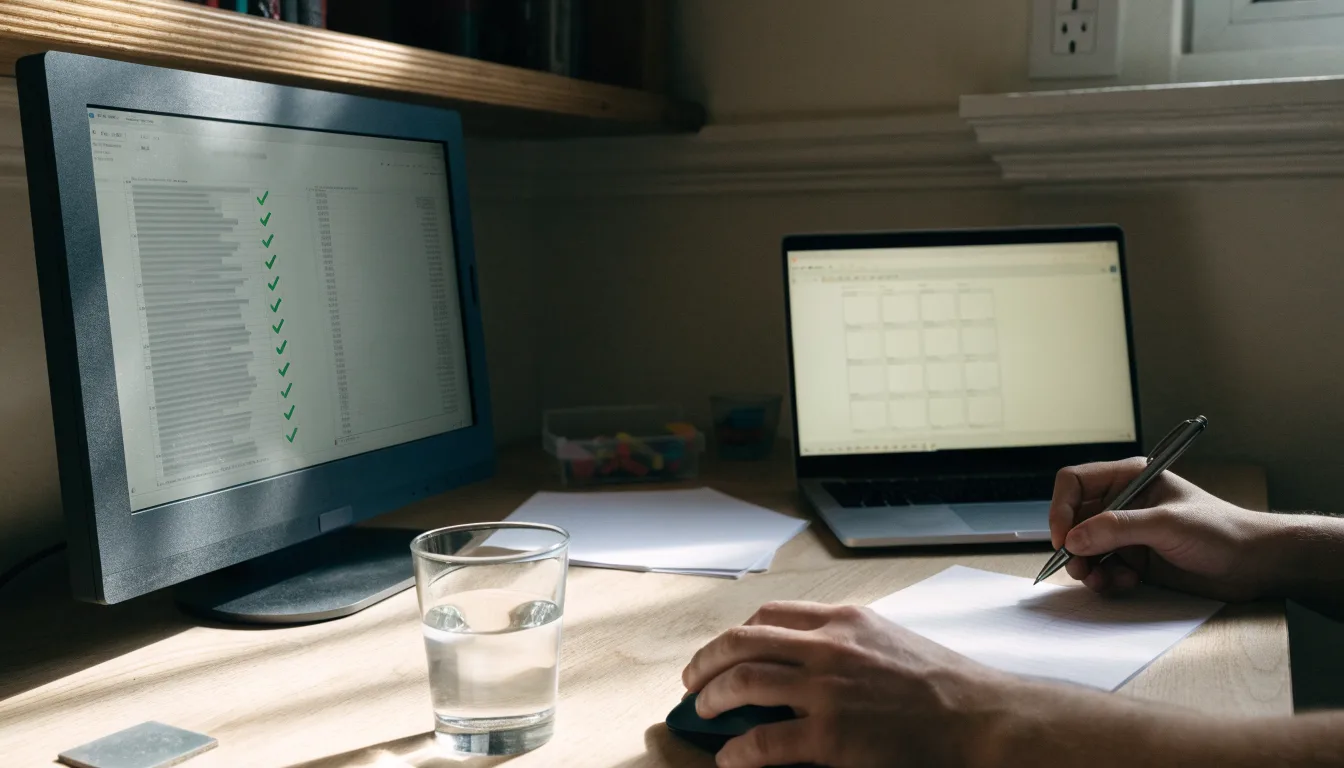
Anti-money-laundering rules add another layer. For remote casinos, identification and verification are required when deposits for gambling or withdrawals of funds or winnings amount to €2,000 or more, whether in one transaction or linked transactions. That threshold is not permission to delay basic account verification until a payout: the separate gambling licence condition still applies.
Offshore practices can differ. A site may ask for documents at registration, at a later account review, or when a withdrawal is requested. There is no reliable universal timetable for offshore checks. A late request may reflect a legitimate compliance check; it may also be a warning sign if the terms are vague, the operator keeps adding requirements, or it will not explain what is needed. The difference is often visible only when money is already tied up.
| Checkpoint | British-licensed online casino | Offshore roulette site |
|---|---|---|
| Identity before gambling | Must verify before permitting gambling | Timing and standard depend on the operator and its regulator |
| Basic identity details | Name, address and date of birth must be included | Check the published terms; no British licence standard applies |
| AML casino threshold | €2,000 in a single or linked transaction | The British threshold does not establish the site’s obligations |
| Documents | May use electronic checks or request documents | Possible requests and timing vary; read the terms before any account activity |
| Complaint route | Internal complaint process, then free ADR if unresolved within eight weeks | UK-licensed ADR protections do not apply |
The table’s contrast is not “regulated means instant, offshore means slow”. It is that the British framework spells out duties and a dispute route. Offshore terms may impose conditions that would be unacceptable under British rules, and there may be no practical route to enforce a complaint from Great Britain.
Five Checks That Separate Evidence from Theatre
The Licence Matches the Domain
Check the regulator’s own register, not a logo or screenshot supplied by the site. Confirm that the operator and the precise domain are listed. A certificate for a different website is not close enough.
The Check Is Explained Beforehand
Look for the identity documents or information that could be requested, and the circumstances in which they may be needed. British operators should tell customers this before deposit. A promise of “instant payouts” beside silence on verification is an unbalanced sales pitch.
The Terms Name the Operator
Find the legal entity responsible for the account, its address and the governing complaint process. If the name changes between the footer, terms and licence certificate, the paperwork is doing an impression of a fog machine.
The Withdrawal Rules Do Not Keep Moving
Read the withdrawal and identity sections together. Repeated requests for new documents, an unexplained review, or a clause giving the operator unrestricted discretion are reasons for doubt. British rules prohibit unfair terms and require an explanation for delayed or refused withdrawals, subject to legal limits such as anti-money-laundering confidentiality.
A Real Complaint Route Exists
Check who handles disputes, when the operator’s process ends, and how a complaint can be escalated. British-licensed operators must provide access to approved ADR free of charge if a dispute remains unresolved after eight weeks. A foreign regulator or ADR service may have different eligibility rules and no UK mandate.
A Careful Way to Assess a Roulette Site
- Identify the legal operator. Compare the company named in the terms with the licence record. This establishes who is actually offering the service.
- Check the exact domain on the regulator’s register. A valid regulator and a valid-looking seal are not enough if the domain does not match.
- Read the identity and AML terms before assessing the offer. Note what documents may be requested, why, and whether the site reserves wide discretion. This is where a late verification problem often announces itself.
- Read withdrawal and complaint terms together. Look for timelines, stated reasons for review, applicable fees, and an independent dispute route. An attractive payout claim is not a substitute for enforceable terms.
- Compare protections with a British-licensed operator. The Commission’s public register and LCCP provide a concrete standard: identity verification before gambling, fair terms, and access to approved ADR.
- Treat uncertainty as information. If the entity, licence or verification process cannot be confirmed, that is not a small administrative wrinkle. It is the central fact about the risk.
Why the Numbers Do Not Prove a Site Is Safe
The Commission’s estimates help frame the size of the issue. In its analysis published 5 November 2026, 2.5% of respondents who had gambled online in the previous four weeks had engaged with illegal gambling websites; a further 1.5% reported doing so in the previous 12 months. Across the wider population, including non-gamblers, 94.4% showed no indication of using one.

Those figures are not a census of every transaction. They are estimates from survey analysis, and “no indication” is not proof that no use occurred. The Commission also identified 586 illegal gambling websites accessible to Great Britain in September 2026. In the second quarter of 2026–27, it took disruption action against 311 websites; 77% saw estimated traffic fall.
That last figure is evidence that enforcement can affect visibility and traffic. It is not evidence that every site disappeared, nor that a site still reachable is safe. The Commission itself distinguishes removal from search results from blocking access. A roulette wheel can remain on screen while the legal protections behind it are absent.
Questions About Roulette and GamStop
Is roulette not on GamStop legal in the UK?
The key legal question is whether a business is offering commercial gambling services to consumers in Great Britain without a Gambling Commission licence. The Commission says that is illegal even if the operator holds a licence elsewhere. A foreign licence may regulate activity in its own jurisdiction; it does not authorise the operator to provide gambling services in Great Britain.
What does roulette not on GamStop live mean?
It usually describes live-dealer roulette offered by a site that is not connected to GamStop. “Live” refers to the game format, not the operator’s legal status or the strength of its identity checks. The same checks apply to the site itself: identify the legal operator, verify the licence and domain, and read the withdrawal and dispute terms.
Are live roulette sites not on GamStop UK-licensed?
Not by virtue of being described as “live” or “UK” in a search phrase. A British licence can be checked on the Gambling Commission’s public register, including whether the listed domain matches. If the operator has only an overseas licence, UK-licensed protections and the British complaints framework do not apply.
Why might identity documents be requested at withdrawal?
An operator may need information to comply with an anti-money-laundering obligation, or to resolve a genuine identity concern. British rules say a withdrawal request must not trigger a request for information that could reasonably have been obtained earlier, although legally required checks at that point remain possible. The Commission says it cannot give one timescale for all identity checks.
Does an offshore licence protect a British customer?
It may establish that a regulator has authorised an operator for some activity under that regulator’s rules. It does not provide a British Gambling Commission licence, UK ADR access or British self-exclusion coverage. Even in jurisdictions with public registers and formal complaint procedures, the practical ability to enforce a decision from Great Britain is a separate matter.
Where can support be found for gambling-related harm?
GamCare operates the free National Gambling Helpline on 0808 8020 133, 24 hours a day, every day of the year; it is also available through live chat and WhatsApp. In Wales, the helpline number is 0808 2819 265. The helpline is not a crisis line. A person at immediate risk of harm should contact emergency services.
The Paperwork Is the Point
“Not on GamStop” is not a shortcut to better roulette; it is a sign to examine the operator’s licence and identity process with particular care. The Commission found 586 illegal gambling websites accessible to Great Britain in September 2026.
Games and Slots
Content created by the «Fast Payout Online Casino» team